|
Driving innovation: the latest from ONTOX! ͏ ͏ ͏ ͏ ͏ ͏ ͏ ͏ ͏ ͏ ͏ ͏ ͏ ͏ ͏ ͏ ͏ ͏ ͏ ͏ ͏ ͏ ͏ ͏ ͏ ͏ ͏ ͏ ͏ ͏ ͏ ͏ ͏ ͏ ͏ ͏ ͏ ͏ ͏ ͏ ͏ ͏ ͏ ͏ ͏ ͏ ͏ ͏ ͏ ͏ ͏ ͏ ͏ ͏ ͏ ͏ ͏ ͏ ͏ ͏ ͏ ͏ ͏ ͏ ͏ ͏ ͏ ͏ ͏ ͏ ͏ ͏ ͏ ͏ ͏ ͏ ͏ ͏ ͏ ͏ ͏ ͏ ͏ ͏ ͏ ͏ ͏ ͏ ͏ ͏ ͏ ͏ ͏ ͏ ͏ ͏ ͏ ͏ ͏ ͏ ͏ ͏ ͏ ͏ ͏ ͏ ͏ ͏ ͏ ͏ ͏ ͏ ͏ ͏ ͏ ͏ ͏ ͏ ͏ ͏ ͏ ͏ ͏ ͏ ͏ ͏ ͏ ͏ ͏ ͏ ͏ ͏ ͏ ͏ ͏ ͏ ͏ ͏ ͏ ͏ ͏ ͏ ͏ ͏ ͏ ͏ ͏ ͏ ͏ ͏ ͏ ͏ ͏ ͏ ͏ ͏ ͏ ͏
|
| |
Welcome to the ONTOX newsletter #17!
|
|
Science That Shapes the Future of EU Animal-Free
Chemical Safety Testing
|
|
| |
The ASPIS cluster – uniting ONTOX, PrecisionTox and RISK-HUNT3R – held its annual Open Symposium on 17–18 September in Athens. The event brought together scientists, regulators, industry, and other stakeholders to explore the latest advances in animal-free safety assessment, keeping human health protection at the core.
"The ASPIS Open Symposium is where science and regulation meet. It highlights how far Europe has come in building ethical, efficient, and human-relevant safety assessments – and reminds us of the collaborative effort needed to make animal-free testing the new standard.” – commented Mathieu Vinken, ASPIS cluster coordinator for 2024–2026 and coordinator of the ONTOX project.
At the heart of ASPIS lies the ASPA, an ASPIS-initiated Alternative Safety Profiling Algorithm, a novel workflow that combines diverse New Approach Methodologies (NAMs) and data into a transparent framework for next generation risk assessment. The Symposium highlighted its refinements, moving it closer to regulatory use. Case studies on developmental neurotoxicity (DNT) showed how NAMs are already informing regulatory decision-making. Discussions also addressed sustainability, ensuring ASPIS tools and knowledge will remain accessible beyond the projects’ end in 2026.
|
|
|
|
| |
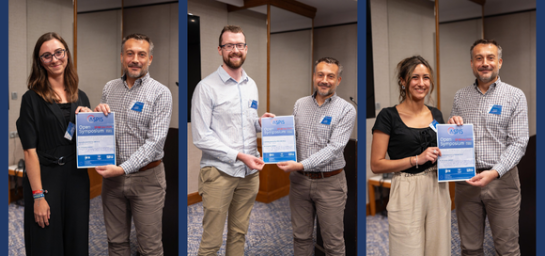
An expert jury also recognised three Best Poster Award winners – one from each ASPIS project – for their outstanding contributions: - Eliska Kuchovska (ONTOX; IUF – Leibniz Research Institute for Environmental Medicine) – Regulation of key neurodevelopmental processes by disease pathways and nuclear receptors in a human Neurosphere Assay
- Eike Cöllen (RISK-HUNT3R; University of Konstanz) – Rapid identification of neurotoxicity alerts for multiple compound classes by high-throughput single cell Ca2+ assays
- Shaleen Glasgow (PrecisionTox; University of Birmingham) – Comparative transcriptomics of Daphnia and Bio-medical models for the evolutionary conservation of a gene network for toxicant associated fatty liver disease
|
|
|
|
| |
Recap videos: Highlights of the ASPIS Symposium
 | |
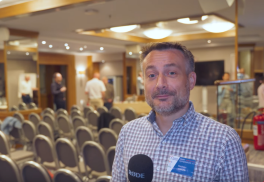
Day one featured reflections from Joseph Shaw (PrecisionTox) and Bob van de Water (RISK-HUNT3R coordinator). They underlined ASPIS as a collaborative platform and its importance for engagement with regulatory authorities. |
|
|
| |
| |
|
On day two, Mathieu Vinken (ASPIS and ONTOX Coordinator) highlighted and reflected on the work still ahead.
You can now relive the Symposium through short recap videos featuring ASPIS voices.
|
|
|
|
|
| |
ONTOX-VHP4Safety webinar: Exploring IT platforms
The fourth webinar in the ONTOX-VHP4Safety series will explore the IT platforms that underpin the VHP4Safety and ONTOX projects. 8 October | 14:00–15:00 CEST | Online | Free participation
Speakers: - Ozan Cinar (VHP4Safety)
- Marvin Martens (VHP4Safety)
- Jörg Marusczyk (ONTOX)
|
|
|
New ONTOX research papers
|
|
| |
Machine learning classification of steatogenic compounds using toxicogenomics profiles
Bwanya B., Lodhi S., de Kok T. M., Ladeira L., Verheijen M., Jennen D., Caiment C.
Toxicology | November 2025
|
From cellular perturbation to probabilistic risk assessments
Maertens A., Kincaid B., Bridgeford E., Brochot C., de Carvalho e Silva A., Dorne J.-L. C. M., Geris L., Husøy T., Kleinstreuer N., Ladeira L., Middleton A., Reynolds J., Rodriguez B., Roggen E. L., Russo G., Thayer K., Hartung T.
Alternatives to Animal Experimentation | July 2025
|
|
|
|
|
|
| |
Unlocking liver physiology: comprehensive pathway maps for mechanistic understanding
Ladeira L., Verhoeven A., van Ertvelde J., Jiang J., Gamba A., Sanz-Serrano J., Vanhaecke T., Heusinkveld H. J., Jover R., Vinken M., Geris L., Staumont B.
Frontiers in Toxicology | July 2025
|
Biology-inspired dynamic microphysiological system approaches to revolutionize basic research, healthcare and animal welfare
Marx U., Beken S., Chen Z., Dehne E.-M., Doherty A., Ewart L., Fitzpatrick S. C., Griffith L. G., Gu Z., Hartung T., Hickman J., Ingber D. E., Ishida S., Jeong J., Leist M., Levin L., Mendrick D. L., Pallocca G., Platz S., Raschke M., Smirnova L., Tagle D. A., Trapecar M., van Balkom B. W. M., van den Eijnden-van Raaij J., van der Meer A., Roth A.
Alternative to Animal Experimentation | April 2025
|
|
|
|
|
|
| |
Scientific Advisory Board Insights
The ONTOX Scientific Advisory Board monitors whether the project is on track towards its goals. A new video series brings you their perspectives.
|
|
|
|
| |
Patience Browne – OECD
 | |
Are there innovative ONTOX technologies that could be applied elsewhere?
|
|
|
|
|
| |
Marjana Novic – National Institute of Chemistry Slovenia
| |

|
What is the most fascinating aspect of ONTOX?
|
|
|
|
|
| |
Paul Whaley – Lancaster University UK
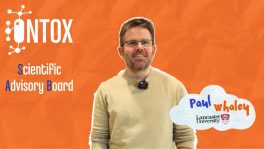 | |
What makes ONTOX so unique?
|
|
|
|
|
| |
Follow us on social media!
|
|
|