|
Take a closer look into ONTOX's scientific ideas ͏ ͏ ͏ ͏ ͏ ͏ ͏ ͏ ͏ ͏ ͏ ͏ ͏ ͏ ͏ ͏ ͏ ͏ ͏ ͏ ͏ ͏ ͏ ͏ ͏ ͏ ͏ ͏ ͏ ͏ ͏ ͏ ͏ ͏ ͏ ͏ ͏ ͏ ͏ ͏ ͏ ͏ ͏ ͏ ͏ ͏ ͏ ͏ ͏ ͏ ͏ ͏ ͏ ͏ ͏ ͏ ͏ ͏ ͏ ͏ ͏ ͏ ͏ ͏ ͏ ͏ ͏ ͏ ͏ ͏ ͏ ͏ ͏ ͏ ͏ ͏ ͏ ͏ ͏ ͏ ͏ ͏ ͏ ͏ ͏ ͏ ͏ ͏ ͏ ͏ ͏ ͏ ͏ ͏ ͏ ͏ ͏ ͏ ͏ ͏ ͏ ͏ ͏ ͏ ͏ ͏ ͏ ͏ ͏ ͏ ͏ ͏ ͏ ͏ ͏ ͏ ͏ ͏ ͏ ͏ ͏ ͏ ͏ ͏ ͏ ͏ ͏ ͏ ͏ ͏ ͏ ͏ ͏ ͏ ͏ ͏ ͏ ͏ ͏ ͏ ͏ ͏ ͏ ͏ ͏ ͏ ͏ ͏ ͏ ͏ ͏ ͏
|
| |
ONTOX Insights will walk you through the articles our excellent ONTOX scientists have published recently. Enjoy these publications with us! |
|
Report of the First ONTOX Stakeholder Network Meeting: Digging Under the Surface of ONTOX Together With the StakeholdersDiemar, M. G., Vinken, M., Teunis, M., Krul, C. A. M., Busquet, F., Zajac, J. D., Kandarova, H., Corvi, R., Rosso, M. Z., Kharina, A., Bryndum, L. S., Santillo, M., Bloch, D., Kucheryavenko, O., Panagiotakos, D., Rogiers, V., Beekhuijzen, M., Giusti, A., Najjar, A., Courage, C., Milec, L., Roggen, E. L.
Alternatives to Laboratory Animals | January 2024
|
|
| |
The EU Horizon 2020-funded ONTOX project's first Stakeholder Network Meeting took place on March 13-14, 2023, in Brussels. The meeting focused on identifying challenges, barriers, and drivers related to implementing non-animal new approach methodologies (NAMs) and probabilistic risk assessment (PRA) to enhance chemical risk assessment for humans without animal testing. Participants included regulatory authorities, companies, academia, and NGOs, who contributed via a meeting and survey to assess their positions and highlight specific challenges and drivers. The survey revealed both consensus and disagreements on issues like capacity building, sustainability, regulatory acceptance, validation of adverse outcome pathways, AI in risk assessment, and consumer safety. Discussions in breakout groups covered topics such as hazard versus risk assessment, AI and machine learning's future role, industry regulatory requirements, and the sustainability of the ONTOX Hub platform. The meeting concluded with a call for ongoing stakeholder engagement, including organizing a 'Hackathon' to address challenges, to ensure successful NAMs and PRA implementation in chemical risk assessment.
|
|
Unraveling the mechanisms underlying drug-induced cholestatic liver injury: identifying key genes using machine learning techniques on human in vitro data setsJiang, J., van Ertvelde, J., Ertaylan, G., Peeters, R., Jennen, D., de Kok, T. M., & Vinken, M.
Archives of Toxicology | August 2023
|
|
| |
The emerging emphasis on probabilistic risk assessment is driven by limitations in existing methodologies and recent advancements in machine learning tools. AI models enable the prediction of hazards and risks for particular endpoints, along with estimating the uncertainty of the risk assessment outcome and shifting from deterministic to probabilistic approaches. However, this transition demands increased resources and expertise. Challenges still need to be addressed before regulators can fully adopt this paradigm. A recent workshop explored the implementation of AI-based probabilistic hazard assessment, highlighting the transition to probabilistic and dose-dependent hazard outcomes, use of internal thresholds for data-poor substances, user-friendly open-source software, the requirement of heightened toxicologist expertise in interpreting AI models, and transparent communication of uncertainty in risk assessment to the public.
|
|
Optimization of an adverse outcome pathway network on chemical-induced cholestasis using an artificial intelligence-assisted data collection and confidence level quantification approachvan Ertvelde, J., Verhoeven, A., Maerten, A., Cooreman, A., Santos Rodrigues, B. D., Sanz-Serrano, J., Mihajlovic, M., Tripodi, I., Teunis, M., Jover, R., Luechtefeld, T., Vanhaecke, T., Jiang, J., & Vinken, M.
Journal of Biomedical Informatics | September 2023
|
|
| |
Adverse outcome pathway (AOP) networks are essential in toxicology and risk assessment for visualizing toxicity mechanisms. They consist of molecular initiating events and key events connected by relationships leading to adverse outcomes. Traditionally, updating these networks manually is time-consuming and prone to missing critical data. This study introduces an AI-driven approach for optimizing AOP networks, specifically for chemical-induced cholestasis, by automating data collection and conducting quantitative confidence assessments. Using the Sysrev platform, AI-assisted data collection was performed. The Bradford-Hill criteria were quantified to assess the confidence in molecular initiating events, key events, and their relationships. These scores were then integrated into a total confidence value and visualized in Cytoscape, with node size indicating event incidence and edge size representing confidence in the relationships. The optimized AOP network identified 38 unique key events and 135 key event relationships. "Transporter changes" emerged as the most frequent and confident key event relationship with cholestasis. Other significant events included nuclear receptor changes, intracellular bile acid accumulation, bile acid synthesis changes, oxidative stress, inflammation, and apoptosis. This AI-optimized AOP network offers a comprehensive understanding of chemical-induced cholestasis, serving as a guide for developing in vitro assays to predict cholestatic injury reliably.
|
|
Predicting the Mitochondrial Toxicity of Small Molecules: Insights from Mechanistic Assays and Cell Painting DataGarcia de Lomana, M., Marin Zapata, P. A., Montanari, F.
Chemical Research in Toxicology | July 2023
|
|
| |
Mitochondrial toxicity is a major concern in drug discovery due to its potential to cause severe side effects, such as liver injury and cardiotoxicity. Various in vitro assays can detect mitochondrial toxicity by targeting specific mechanisms, including respiratory chain disruption, membrane potential disruption, and general mitochondrial dysfunction. Additionally, whole-cell imaging assays like Cell Painting offer a phenotypic perspective of cellular responses to treatments and assess mitochondrial health. This study aims to develop machine learning models for predicting mitochondrial toxicity by leveraging available data. Researchers created highly curated datasets of mitochondrial toxicity, categorized by different mechanisms of action. Given the limited labeled data for toxicological endpoints, they explored using morphological features from a large Cell Painting screen to label more compounds and expand their dataset. The findings indicate that models incorporating morphological profiles outperform those based solely on chemical structures, improving prediction accuracy (up to +0.08 and +0.09 mean Matthews correlation coefficient (MCC) in random and cluster cross-validation, respectively). Including toxicity labels from Cell Painting images enhanced predictions on an external test set by up to +0.08 MCC. However, further research is needed to enhance the reliability of Cell Painting image labeling. Overall, the study underscores the importance of considering various mechanisms of action in predicting mitochondrial toxicity and highlights the potential and challenges of using Cell Painting data for toxicity prediction.
|
|
|
| |
You could also be interested in...
Submitting a manuscript to the journal “Evidence-based Toxicology” for a Special Issue on “Preregistration templates for toxicology and environmental health research!
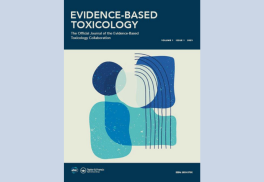 | |
Submit a new type of manuscript, “Preregistration Templates.” The templates are designed to help researchers specify the planned methods for their research before they collect data, aiming to improve how research is conducted and reported.
|
|
|
|
|
| |
Follow us on social media!
|
|
|